The same PC game can differ in price by a factor of five depending on where and how you buy it. Some of that gap is legitimate. Some of it will cost you the game.
Official stores
Steam, GOG, the Epic Games Store and publisher storefronts. Slowest to discount, but the key is yours, refunds work, and nothing can be revoked.
GOG is worth knowing about separately: its games are DRM-free, so the installer keeps working regardless of what happens to your account.
Authorised resellers
Some sites are official partners and receive keys directly from publishers. Prices are genuinely lower and the keys are legitimate.
The distinction that matters is whether the site is an authorised reseller or a marketplace where individuals resell keys. The first is safe; the second is where the problems start.
Regional pricing
Publishers set prices per country against local purchasing power, not by converting dollars. The gap between the cheapest and dearest region is routinely larger than any seasonal sale.
If you live in a lower-priced region, you are already getting that discount — you do not need to do anything to claim it.
The two to avoid
Grey-market key marketplaces. Keys bought there are sometimes purchased with stolen cards. When the chargeback lands, the publisher revokes the key — often months later, after you have played it. You lose the game and have no recourse.
VPN region-switching. Changing your Steam store region to buy at another country's price breaks the Steam Subscriber Agreement. Valve does enforce this, and a locked account takes your entire library with it.
Timing
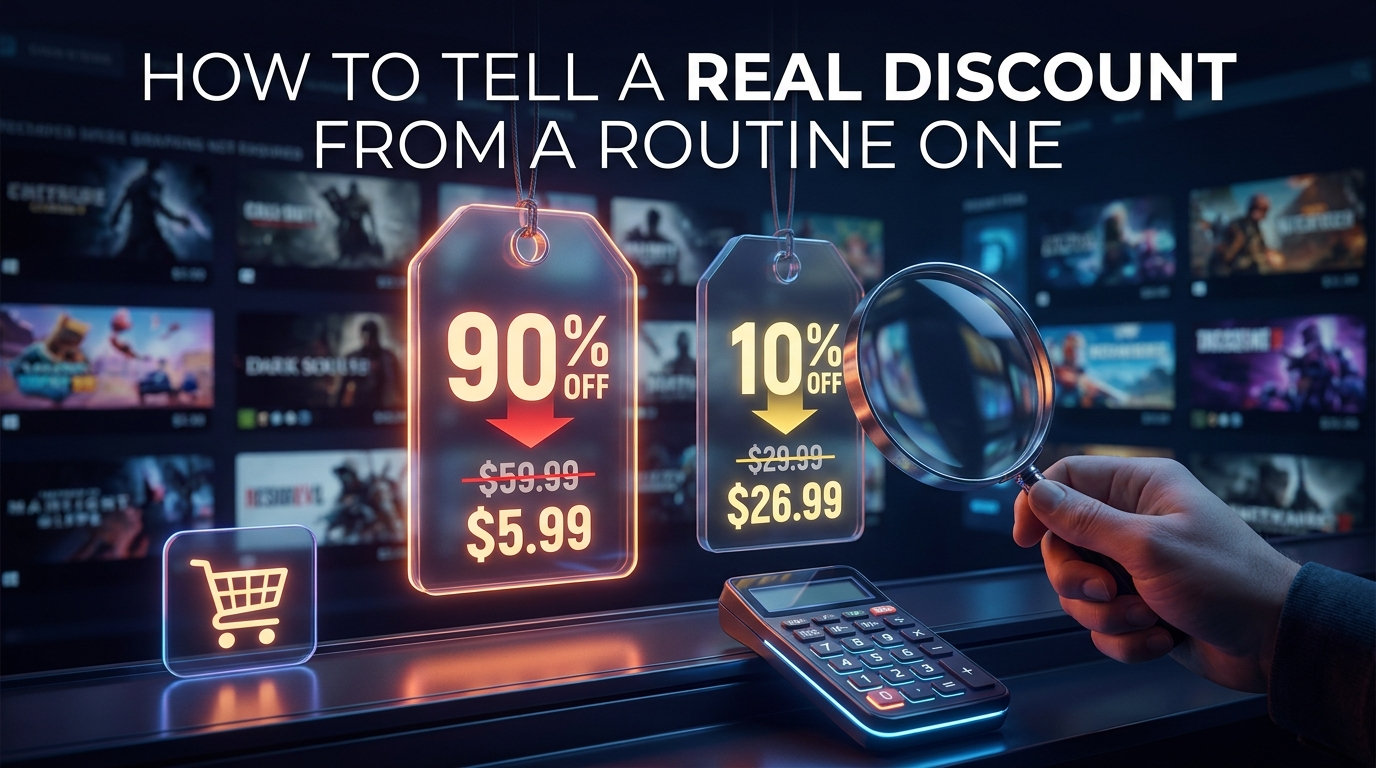
Most games follow a pattern: a small discount within a few months, a meaningful one at the first seasonal sale, and a floor about eighteen months in that rarely moves after. Knowing where a game sits in that curve is worth more than watching for any particular sale.